Showing posts with label Internship. Show all posts

Friday, 15 April 2016

Is Positivity a Choice?

P a s s i o n

S e l f - c o n f i d e n c e

Passion & self-confidence are almost necessary for leading when you're not in charge. It's definitely necessary to work on these things if you don't have them already and you're trying to lead from a position of 'not in charge'. 

The idea that 'if you're not passionate then you're wasting your time' is quite negative if you think it means: 'if you've not got a passion for what you do then just give up'. If you make this positive and realise that it means 'if you've not got a passion for what you do then search for a small amount and cling onto that to drive you further'. It's about choosing to look for passion where it's been lost. This is no mean feat. I'm currently in a position of serving someone else's vision and it's hard. In fact, it's almost impossible when you've got visions of your own that cannot be brought in to the equation. But I have to begin to own some of the passion that does match up. Ultimately, I have a passion for people finding Jesus and knowing Him, I have a passion for children being free to express the whole whack of Holy Spirit that's inside of them, and I have a passion to see the youth of my hometown come together as one body. The first two of these things I am able to witness and serve in my position. The last passion is a work in progress that I find easier to pursue in other local churches with larger youth groups.

Self-confidence is a   b i g   thing. I've grown up my entire life thinking that I've been dealt a pretty good amount of self-confidence. Last night, my perceptions changed. It's something I'm working on. The reason I'm telling you this is not to give you less confidence in me, but to acknowledge that everyone struggles with lacking in some areas of self-confidence. "Self-confidence is the first requisite to great undertakings" can put pressure on ourselves to feel the need to be perfectly happy with who we are. I think self-confidence needs to come down to recognising what things you don't like about what you do and how you think and knowing that these things are not who God made you to be. You were not made to be anxious. You were not made to project your feelings. You were not made to lack in compassion. You were made perfect and God wants to work in and through you despite your imperfections. That's the self-confidence that is needed. A self-confidence that has little confidence in who you are but 100% confidence in who God made you to be and in God Himself.

The influencers lead!

1. Lead yourself. 

Learning to lead is learning to be a good follower. 
A star follower says: "I want to help you achieve what you want to achieve".

Proving that you can lead yourself, arguably gives you more opportunities to lead others. If you can lead yourself, you will be top of the list when the organisation look to promote someone into a position of "higher" leadership.

2. Choose positivity. 

Make it a choice.
The greatest thing you can bring to your team is the positive emotional energy.
Keep moving forward.
Think 'we' over 'me'.

More important than making the right decision is taking the decision and making it right. You can undermine the momentum around the decisions of an organisation, but you can also propel it! Get 100% behind it and make it work.

Here's a story from Andy Stanley's church...
The church had expanded to the point where they needed a West and an East auditorium for the service. This meant a congregational split. Those sat in the East would get the live sermon, those sat in the West would get a live feed of the sermon on a big screen.
It had been decided that people with surnames A-M would sit in the East and those with surnames N-Z would sit in the West.
A girl, who was explaining the new system to a guy who had missed the meeting, saw his distaste and she said 'oh really, I thought it was a great idea!'. This took him aback and he began to think that he'd missed something and it would be a good idea after all. Then she began to snicker, and she broke and said 'Andy told us to tell anyone who thought it wasn't a good idea that we thought it was a great idea!' The positivity made it a great idea. If she had gone 'I know *whisper* I thought the same thing'. then she would have fed the negative energy surrounding the new idea. The idea was happening whether they liked it or not and she would've just made it a great idea for him.

This idea doesn't quite sit well with me. Which is ironic because I should have positive energy flowing out from me about this new way I need to lead when I'm not in charge. But I'm honestly not so positive about the idea. I'd be more comfortable with saying 'Ah I think it could work! It's not an awful idea after-all and we can see how it goes' because that's what I'm really thinking. Why lie and say that I think it's a great idea when I don't? There's positivity and then there's lacking genuinity (my new made up word for more impact in this sentence).

When we struggle with not being involved in a decision and then having to watch it happen even though we oppose the idea, we can think of choices that we don't get to be involved in as 'that's okay, they are taking that thing off of my plate so I can focus on what I'm doing'.

So there are my jumbled thoughts about some things surrounding leading from a position of not being in charge. I'm going to process this a little bit more today...

Podcast Information:
Andy Stanley | How to Lead When You're Not Incharge

Amy xo

post signature

Monday, 21 March 2016

What Do You Call An Alligator In A Vest?

An Investigator.
Children were born to wonder, to discover, and to be passionate.
w o n d e r,   d i s c o v e r y   a n d   p a s s i o n.
What are the children you are ministering to going to give their heart to?
When they walk away, what do you want to be in them?
When Jesus was asked: Of all the commandments, which is the greatest? He answered: Love the Lord your God with all your heart, soul, mind, and strength. He then added: Love your neighbour as yourself. Everything is pointing to loving God and loving others, and understanding enough to have a known identity in Christ.
Lead with an end in mind. That children will...
Have a relationship with God. Love others. Know their identity in Christ. 
Wonder
Wonder aids faith in a God that can't be seen. A God who is bigger than anything we can face. He is uncontainable. Allow children to know how big He is and how much they can trust Him, without putting Him into an explainable box.
Wonder - Bethel Music
Discovery
Treasure hunt. Children discovering who God is and how He is relevant to them and knowing who they are in Him. Investigating.
Good, Good Father - HouseFiresII
Passion
Links with purpose. They know who they are, what they can do with God and now they want to find purpose in making a difference in the lives of others.
Going On A Journey - Vineyard Records
There is some style of formula that goes with this. A different combination of wonder, discovery, and passion for each age group.
Pre-schoolers: Wonder. 
They need to know that God loves them and wants to be their friend. They need to know that they are significant and that God has a plan for them.
Children's ministry: Turn up discovery and add a bit of passion. 
Primary school aged children are discovering for the first time what it means to be a Christian through studying stories in the Bible. They are searching deeper for a relationship with God from the wonder they've had since they were small. They are exploring their identity, and we want that identity to be in Christ.
Student ministry: Turn up the passion.
Enabling students to discover their own gifts helps them to grasp their passion to serve and help others. Students won't feel significant unless they have something significant to do: becoming involved in the lives of others, not just knowing the Bible stories well. Everybody is going to give their hearts to something. If we don't establish giving their hearts to serving Jesus then they will give their hearts to something else. We can strive to encourage Jesus-centred worship. 
Everyone is searching for a hero. Children and adults alike. That hero is Jesus, the creator. We long to know our creator and, as a human race, we find earthly heroes to step in. These earthly heroes don't even begin to satisfy our hunger for Jesus. Read more here.
We're wired for adventure.
It is up to us as leaders, to look to scripture and God's principles to help children discover their identity in Christ, instead of searching for it in other adventures.
Lots of people believe:
But the bible says:
We long for romance.
The key to satisfying a longing for romance is a relationship with God. Once we have a relationship with God then we have the capacity to love others.
Wonder, discovery, and passion. When we have these leading our children's ministry we impact the message and the way we teach.
When we see children moving in the right direction, not using a bounded model but a centred model, we know we're on the right track. Pushing every child and teenager to a similar destination:
insight wonder
provoke discovery
fuel passion
God the Father | Wonder
God the Spirit | Invading Hearts - Discover
God the Son | Give His Life For All People - We Should Do The Same
Challenge: How much wonder, discovery, and passion is in your heart as a leader?
Do the children see you pursuing the truth? Do they see your passion? Do they see you serve out of duty or relationship with God?
Your relationship with God is linked to how you connect with the children in their lives.
What about having a vision for each children's ministry age group in a church?
What would your vision statements be?
- Helps all ministries to know how they are working together -
w o n d e r,   d i s c o v e r y   a n d   p a s s i o n.
Podcast Information:
OrangeBlog - Orange Leaders - Wonder Discovery Passion
Amy xo
post signature

Friday, 18 March 2016

What's Orange and Tastes Like an Orange?

An Orange.
And the church, of course. Well, perhaps the church doesn't taste like an orange unless you choose fruit over doughnuts in the coffee break or it's a Christingle service. But one thing is for sure: The church should look orange.
I'm not talking about a congregation of Oompa Loopmas...
Image Source: Google
I'm talking about a balance of love and light. Y e l l o w represents the light from the church and r e d represents the love from the church. Orange is a mixture of these two colours. The church should look orange.
"Two combined influences make a greater impact than just one influence. Church and family on the same page."
In the same way that light and love combined makes a greater influence, so does the combination of church and family. Where the church helps to influence whilst the family can influence even more during everyday life.
Here are some claims:
1. "Nothing is more important than a person's relationship with God"
2. "No one has more potential to influence a child's relationship with God than the parent"
- This is about an "every day faith kind of concept" not just "a Christian on a Sunday morning"
3. "No one has more potential to influence the parent than the church"

Here are some figures:
86% of parents believe they are responsible for their spiritual development of their child. This figure included secular parents.
Over 90% of all parents believe that they have responsibility for their child's moral beliefs.
1 of 5 parents said the church did anything to help them be parents.
Wow. Take a moment to begin to process the potential you can unlock by investing some time into the parents too. Willy Wonka Condescending memes are known for being really condescending...
Image Source: Google
There's an element of truth in the thought that what parents teach children about their spirituality and their relationship with Jesus will stick with them for a life time. I don't like the term 'religion' but I can appreciate the value that time investment from parents can really shape a child's spiritual development.
So, as a church, how are we helping parents?
How are we helping them to be more involved and engaged in the child's spiritual relationship?
When we engage with a child on a Sunday morning and send them home with a craft that the parent/guardian can talk about with them, we are helping God-centred conversations to go on at home.
When we pray with the children on a Sunday morning, and ask them if they need prayer for anything, we are encouraging them to ask for help from a leader, or a parent/guardian, in the form of prayer.
These examples are just small ripples in comparison to the big waves of impact that we could make if we invested some of our time into the parents, who in turn have 3000 hours a year to invest into their own children.
IMPACT

How To Cover Your Child in Prayer
"If you determine to circle your children in prayer, you will shape their destinies... your prayers will live on in their lives long after you die" - Matt Batterson.
Read the full article here.
So prayer is one weapon that we can encourage parents to use to shape the spiritual lives of their child. Prayer with the child is important too. It sends a reminder to the children to do this with their children as they get older.
"The churches potential to help the child dramatically increases when you help the parent"
The majority of parents do not spend any time during the week teaching spiritually.
God gave this responsibility to parents as something for them to do. They have the skills.
"Train up a child in the way he should go: and when he is old, he will not depart from it"
- Proverbs 22:6
"Make the things I'm commanding you today part of who you are. Repeat them to your children. Talk about them when you're sitting together at home and when you're walking together down the road. Make them the last thing you talk about before you go to bed and the first thing you talk about the next morning." 
- Deuteronomy 6:6-7
"... so that God's people may be up to the task ahead and have all they need to accomplish every good work."
- 2 Timothy 3:17
Get every parent to do something more than what they're already doing.
Look at parents through a different filter:
1) They want a plan/system that will help them know how to pass on the information to their children
2) Give them models for these plans
3) They want to know what they can do right now, today, tomorrow. What's next?
So, we need to, as church leaders:
Help parents to know that they are qualified. 
Parents wouldn't disregard their child's need for help on homework because they've not got a teaching qualification. They wouldn't stop helping the children take their medication because they're not a doctor. Church can help them to feel qualified. 
Believe that they are spiritual leaders to their children.
If the church believes that they can be spiritual leaders to their kids then they will start to believe it too.
Invest time into helping parents with plans and ideas.
The more suggestions we give, and help we provide the parents with, the more equipped they will feel to be a spiritual leader to their child.
This has thrown a few ideas into the mix for me which I'm still processing. Ideas about a parent-child Sunday where each child group meets in a different room but with their parents present so that we can learn together about being spiritual at home. It's important for parents to see their child on a Sunday morning and vice-versa. So that both the parent and the child can be open about their own spirituality and, therefore, begin to support each other at home.
It's not until I was much older that my mum and I began having conversations about spiritual things that I remembered because I came home and asked big questions. Perhaps if my mum had been encouraged more when I was younger we would have drawn alongside each other spiritually at an earlier time. 
One way that this 'drawing closer spiritually' could be done is a simple addition to a normal routine. When a child creates something, such as a painting or sculpture, to ask the child what they think God is saying to them through that picture. To explore together what message of encouragement it holds.
Image Source: Google
Podcast Information:
OrangeBlogs - Orange Leaders 40.3000
Amy xo
post signature

Thursday, 3 March 2016

We're All Just Rainbow-Puking Unicorns?


Is the millennial generation a group of r a i n b o w - p u k i n g - u n i c o r n s or are they just mis-guided optimists?
(Click to be taken to the full article)

You don't have to look far in the music industry to see that the millennial generation think that they can change the world, shine bright, and make a difference. 

Rihanna - Diamonds

This is a positive thing, though. We were all created to be creators that would dream up the impossible and make it happen though God's awesome power.
I take the observation in this article, that the millennial generation are hugely optimistic and look for value in a job in different areas to money, as a great encouragement. They're one step closer to their Creator.
We are a generation that gets everything immediately: instant messaging, online shopping, 'likes' as instant feedback on photographs and videos that we share.
This means we know how to 'dream something up' and see it happen straight away. I went to a talk recently with Roy Crowne as the main speaker. He said that when we get dreams and visions from God we need to putting footing on them. In my experience, the longer you leave something without footing, the quicker it rolls away. So, a generation that has grown up with no bounds to the instant success that they can grasp has attempted their 'impossible' dreams and, in cases where God steps in, they have been realised.
Another positive to the mindset of the millennial generation is that failure isn't final. On social media failure lasts all of 3 days before it's been forgotten. This opens up the playing field for another try from another angle.
Something that could have been lost in the millennial generation upbringing is a strong sense of community. We're all the more cautious of people we see on the street. Are they to be trusted? But we've kept relationships going on social media that otherwise would have been lost. Just last week I met up with a group of friends, one of which I hadn't seen since the summer, to get a drink at the pub. We spoke about life and started straight where we left off from. These opportunities can play a key part in building that community element back up again.

We are not a lost generation; we're closer to finding our identities in God.

How can the millennial generation lead from a position of not being in charge?

"...in order to make anything better you have to think critically..."

Note the phrasing of this quote. The term 'think critically' is very different to the phrase 'being critical'. The latter brings a host of negative connotations.

Leaders within an organisation looking at how things can get better, and speaking about those, help the organisation to move forward. Those that keep it to themselves can fall into the trap of secretly wanting the organisation to fail: 'Well I knew it was bad from the start but they didn't do anything about it...'. This mentality is not ideal, or even helpful, for furthering any success.
Think like you're in charge, as if you're the owner. 
When an owner sees rubbish on the floor, they pick it up. When an employee sees rubbish on the floor, they walk past and wait for someone else to do it. When you start making the steps to change what is wrong you project your feeling of: "This bothers me, I want this to bother everybody."

In summary to 'thinking critically' as an answer to the question,

Thinking critically = positive. Being critical = negative.

Danger = becoming cynical.
Image Source: Google
Jesus walked around with a towel not a clipboard. 
Thinking critically is about finding out where you can help, not giving a score.

"Reject passivity... go make it better"

Passivity is allowing others to do things to you without complaining or pushing back (Google definition).
When we're not in charge we can begin to follow this trail of thought:
'When they get their stuff together, then I can get on with what I want to do, until then I'm going to have to wait.'
There has to be an organic origin to the way we make things better for furthering the success of the organisation. If we act out of spite and become negative about the things we are changing then we are being less helpful than if we were to stay passive. Spitefulness could lead to tension and stressful work relationships.
LIE: "When I'm in the leader's seat, then I'll have influence"
TRUTH: "Everyone has influence"
Passivity is not a good leadership strategy. If a babysitter was passive, the children would never go to bed, tie her to a chair and all she/he would respond with is 'please stop mis-behaving'.
"When there's something to blame, there's nothing to work on." The minute we shift the blame to someone or something else the problem is no longer our own. Just like with thinking critically we need to take ownership and not pass the baton.
"When I'm only waiting for someone to hand me something, I have the potential to become someone who won't be handed anything"
In other words, if we take ownership and start to show what we can do with what we've got then we will be handed more. But, the more that is on your plate, the less you will need to be handed because you've taken ownership and started making changes by working on the things in front of you.

Image Source: Google
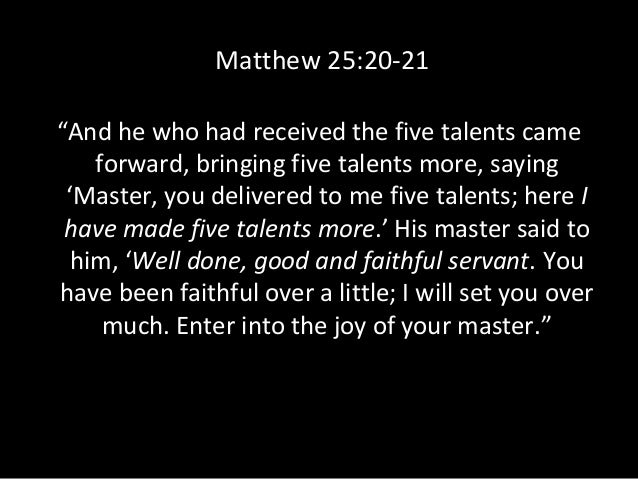
^Parable of the Talents^

Focus on making what you have better, not making the boss happy.

'Give your best people the best opportunities, and your best people are those who make the best out of the opportunities they've been given." (para-phrased Jim Collins).


Full podcast information:

"How to Lead When You're Not In Charge"
> Lead yourself
> Choose positivity
> Think critically
> Reject passivity
post signature

Thursday, 14 January 2016

When Life's a Mess... Just Be


Let's get real here. The photo looks pretty because it's got fairy lights in it and I framed it well. The bed isn't made but looks comfortable and inviting. The shelves aren't organised but hide in the shadows. And my floor, well you can't see it in the picture, but you sure can't see it in real life either. There are clothes everywhere. A mess. But with the right lighting, The Perfect Light, it's a somewhat beautiful mess, wouldn't you agree?

When Life's a Mess... Just Be

Seriously, just be. Just be. Sit and be you. Stand and be you. Lie down and be you. Just be.
There's something so special about taking the time to slow down and just be you with God, Jesus, Daddy. This is where I choose to do just that (see above image). Mostly because it's really rather convenient to have my quiet place where I already go to rest every single night.

Life is a mess, always. Fact. Even when it seems perfect on every level, there is an underlying mess just waiting to be discovered. Those people you think have it all together? They don't have it sussed out. Life isn't about perfection, it's about embracing the mess.

Image Source: Google
A rainbow is one of the most beautiful things that God ever created! It's colourful, it's random, it's huge. It serves as a constant reminder that, because scientifically rainbows form when the sun hits the rain, when light shines through the rough times something beautiful is formed. 

You are God's project and your messy life is one of a kind. It's unique mess. It's beautiful mess. But His light makes a rainbow in your mess.

Acknowledging that we are made for messy lives and taking the time to sit and just be is so powerful. Every single being has access to an insanely awesome God. A wonderful counsellor! A prince! A miracle-worker! A creator! A father! A friend! An enjoyment so indescribable comes from being with Him. Like with, with. In a relationship with. A relationship that is never battered and bruised by sin and wrongdoing on our behalf. Thank you, Jesus!

'You raise me up so I can stand on mountains, You raise me up to walk on stormy seas, I am strong when I am on Your shoulders, You raise me up to more than I can be'
//Westlife//

Tonight I had my circle. A circle is a part of my church that is where relationship and personal support happens. Sundays can be so busy and daunting that having a group of people to grow with is so important! In other churches it might be called a cell group. If you're currently involved in a church, or similar organisation, but not an active member of a circle/cell group, I encourage you to be! It was tonight at circle that I was able to piece together some of the thoughts that formed this post.

Amy xo

post signature

Friday, 4 September 2015

My First Week as an Intern

Okay,
I'm not too sure how to describe how I feel about this week, but it's definitely positive! I saw a post recently which gives names and explanations to emotions that you didn't know had a name. But these were all negative so that'll be no help for me this week.
As it was a bank holiday this Monday, I started on Tuesday. I had a fairly busy day with a LOT of information to write down and digest over the next few days.
I've had fun this week getting to know different aspects of the organisation and I'm amazed at how many things run on top of the standard 'Sunday Morning Gathering'.
God's definitely been challenging me with some choices already, one of which I was lost for how to do even though I knew the right decision and wanted to go for it. And lo and behold a couple of days ago He handed an answer to me on a plate. God is good!
Today I've been in the office preparing a few things for Sunday morning, networking with some people within the church and looking at some personal discipleship. I'm about 10 minutes into a video entitled 'John Wimber Signs Wonders1985 1/12 (Personal Pilgrimage)". It's on YouTube if you'd like to have a listen. Already some thing that has been on my heart recently is cropping up in the video. The difference between "Christians" and those who have a relationship with God.
In the next few weeks I hope to have gotten my head around some of the challenges and questions I'm sure this video will present and I plan on writing a bit of a post about what I've learnt from it and what I've found interesting.
A quote from the video that is already ringing in my head is that the 'study of scripture' should directly 'affect our behaviour' otherwise it was pointless study. This is quite the sweeping statement to make but it has a very valid point that when we read the scripture our hearts long for things that God longs for and this should, in theory, change our behaviour in some way.

A question to ask yourself as much as possible over the weekend:
What would Jesus do?
And if you don't know then look it up, the Bible is there for you to use in times of uncertainty as well as every day life.
post signature